Introduction
Living sustainably is no longer just a trend; it’s a movement toward protecting the environment for future generations. Creating a zero-waste home is one of the most impactful ways to reduce your environmental footprint, conserve resources, and inspire others. By adopting waste reduction techniques, such as waste composting at home and embracing a zero-waste lifestyle, you can significantly reduce your household waste. In this guide, we’ll walk you through essential tips for achieving a zero-waste home with guidance from eco-conscious companies like Greenest, which is dedicated to helping homeowners create sustainable living spaces.
What is a Zero-Waste Home?
A zero-waste home is a household that aims to minimize the waste it produces, reusing, recycling, or composting as much as possible. Zero-waste homes often prioritize sustainable practices, from purchasing eco-friendly products to composting food scraps, to reduce reliance on landfills.
Why Adopt a Zero-Waste Lifestyle?
The benefits of adopting a zero-waste lifestyle go beyond just reducing trash. Here’s why going zero waste is beneficial:
- Environmental Conservation: Reducing waste conserves natural resources and minimizes pollution.
- Healthier Living Spaces: A zero-waste home often involves reducing chemicals and plastic, resulting in a healthier environment.
- Financial Savings: By buying less and reusing more, you’ll save money over time.
- Community Impact: Zero-waste initiatives can inspire others to make similar choices, leading to a collective positive impact.
How to Start Your Journey to a Zero-Waste Home
Transitioning to a zero-waste home may seem daunting, but breaking it down into manageable steps can make it easier.
- Conduct a Waste Audit
To start, examine what types of waste your household generates. Separate your trash into categories like food waste, plastic, paper, and glass. Identifying the main sources of waste in your home will help you create a targeted plan.
- Set Zero-Waste Goals
Set achievable goals based on your audit. For example, you could aim to reduce single-use plastics by a certain percentage or start composting kitchen scraps. Setting realistic goals ensures you can make consistent progress.
Essential Tips for Achieving a Zero-Waste Home
1. Reduce, Reuse, Recycle
The three R’s—reduce, reuse, and recycle—are fundamental to creating a zero-waste home.
- Reduce
Reducing waste begins with mindful consumption. Before purchasing an item, ask yourself if it’s essential. By minimizing impulse purchases, especially those involving packaging, you reduce the amount of waste that enters your home.
- Buy in Bulk: Purchase bulk items to reduce packaging waste.
- Choose Eco-Friendly Products: Opt for products with minimal or compostable packaging.
- Say No to Single-Use Plastics: Avoid single-use items like plastic bags, bottles, and cutlery. Instead, bring reusable alternatives wherever you go.
- Reuse
When reducing is not possible, reusing items is the next best step.
- Repurpose Containers: Glass jars and containers can be reused for storage, cooking, and organization.
- Repair Instead of Replace: Fix broken items instead of replacing them. This can include mending clothing or repairing small appliances.
- Opt for Secondhand: Buy secondhand furniture, clothing, and other household items whenever possible.
- Recycle
While recycling should be a last resort, it’s an essential part of any zero-waste home.
- Sort Recyclables Correctly: Research your local recycling guidelines to understand what can and cannot be recycled.
- Compost Organic Waste: Organic waste, such as food scraps and yard clippings, can often be composted instead of recycled.
2. Waste Reduction Techniques for a Zero-Waste Home
- Waste Composting at Home
Composting is one of the most effective waste reduction techniques you can implement. It involves breaking down organic matter to create nutrient-rich soil that can be used in gardening.
3. How to Start Composting at Home
- Choose a Compost Bin: Select a bin suited for the size of your household and available space. Options range from indoor bins to outdoor compost heaps.
- Gather Compostable Materials: Include fruit and vegetable scraps, coffee grounds, eggshells, yard waste, and paper products. Avoid adding meat, dairy, and oily foods.
- Maintain the Compost: Turn the compost regularly to aerate it, and add water if it becomes too dry.
- Composting is not only an excellent way to reduce food waste but also helps you create a zero-waste garden with natural fertilizer.
4. Shop with a Zero-Waste Mindset
Adopting a zero-waste lifestyle starts with making more conscious choices during shopping.
- Bring Reusable Bags and Containers: Bring your bags, containers, and jars to eliminate the need for single-use packaging.
- Buy Local and Seasonal: Purchasing locally grown and seasonal foods reduces packaging waste and supports local farmers.
- Choose Refillable Options: Many stores now offer refill stations for items like soap, detergent, and grains.
5. Create a DIY Cleaning Kit
Household cleaning products are often packaged in plastic and can contain chemicals. Creating a DIY cleaning kit using simple ingredients like vinegar, baking soda, and essential oils is both sustainable and effective.
- Make Multi-Purpose Cleaner: Mix vinegar and water for a simple, effective cleaner.
- Use Reusable Cloths: Replace disposable wipes and paper towels with reusable cloths or towels.
6. Swap Disposable Items for Reusable
Switching to reusable items is one of the easiest ways to reduce waste at home.
- Use Cloth Towels Instead of Paper: Replace paper towels with cloth alternatives that can be washed and reused.
- Invest in Reusable Kitchen Products: Switch to beeswax wraps, stainless steel straws, and reusable containers.
- Opt for Reusable Personal Care Products: Consider reusable cotton rounds, safety razors, and bamboo toothbrushes.
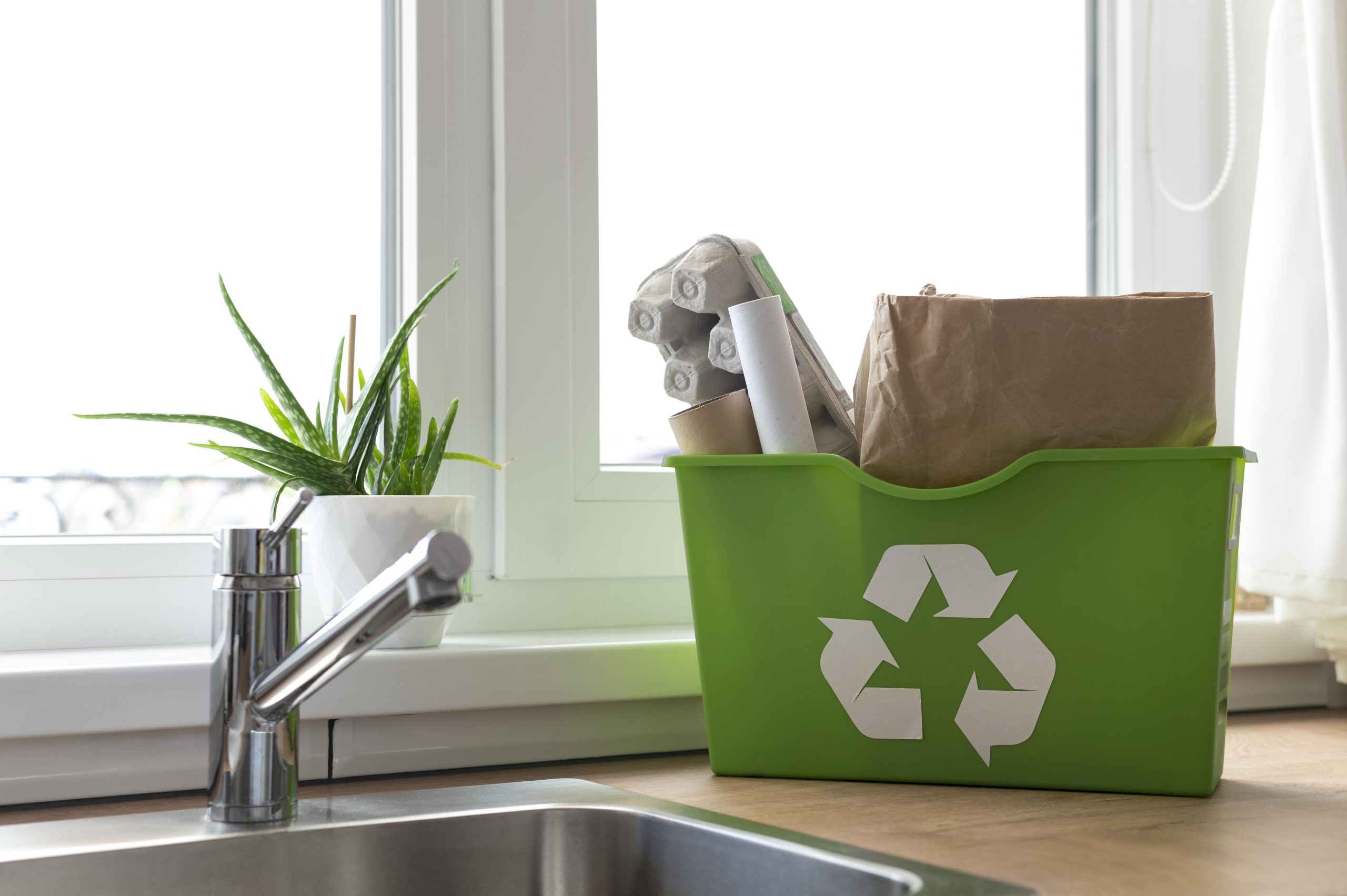
7. Set up a Recycling System
Create a recycling station in your home to sort and store recyclable materials. Having separate bins for plastics, metals, and paper can make recycling more convenient and ensure you’re following proper guidelines.
Sustainable Habits for Maintaining a Zero-Waste Lifestyle
Transitioning to a zero-waste home is a long-term commitment. Here are some daily habits to help you maintain a zero-waste lifestyle:
Meal Planning and Food Storage
- Plan Meals: Planning meals helps you buy only what you need, reducing food waste.
- Store Food Properly: Use glass containers and reusable wraps to store leftovers and reduce spoilage.
- Repurpose Leftovers: Get creative with leftovers by using them in new recipes to avoid food waste.
Learn to Say No
In a zero-waste lifestyle, saying “no” can be powerful. Turn down unnecessary promotional items, packaging, and disposable products to prevent waste from entering your home.
Educate and Involve the Whole Family
Teach family members the importance of waste reduction techniques and involve them in composting, recycling, and shopping sustainably. Creating a zero-waste home is easier when everyone is on board.
Zero-Waste Bathroom and Personal Care Tips
Bathrooms are often a source of waste due to single-use toiletries and personal care products. Here’s how to make your bathroom zero-waste:
Use Package-Free Toiletries
- Solid Shampoo and Soap Bars: Replace liquid shampoos and soaps with solid bars to eliminate plastic packaging.
- Switch to Toothpaste Tablets: These are an eco-friendly alternative to toothpaste tubes.
Choose Sustainable Personal Care Products
- Reusable Cotton Pads: Opt for washable cotton rounds instead of disposable ones.
- Safety Razor: A metal safety razor is a long-lasting alternative to plastic razors.
How Greenest Can Help You Achieve a Zero-Waste Home
Greenest is committed to helping homeowners embrace sustainability by offering eco-friendly products and guidance on waste reduction techniques. From providing high-quality compost bins to creating reusable household items, Greenest supports every step of your zero-waste journey. Their range of sustainable solutions ensures that each homeowner can make meaningful changes without sacrificing convenience or style.
Conclusion: Embrace the Journey to a Zero-Waste Home
Achieving a zero-waste home is a fulfilling, transformative process that benefits both your household and the planet. By making mindful choices—whether through waste composting at home, using sustainable products, or embracing waste reduction techniques—you’ll cultivate a healthier, more eco-conscious lifestyle. Companies like Greenest make this journey even more accessible, offering products and solutions tailored to a zero-waste lifestyle. Start your path towards a zero-waste home today, and become part of the growing movement that’s working towards a cleaner, greener world.